Wednesday, 18 November 2015

Memento


The opening sequence I will be doing fits into the Mystery Thriller genre so as a group we decided to each watch a movie from the same genre and analyse main themes, ideas and cinematography that appear in the movie which are either typical of the genre or that we could use in our opening sequence.


The movie focused on a lot of objects or facial expressions/emotions which linked to the narrative or characters so close ups were used many times.  


When following the main character around following shots were used to show the action as one big continuous sequence.

There was a lot of dialogue in the movie not just a few words spoken before the murders like a villain typically does but very long and detailed conversations and even small talk.

The movie has scenes in which the main character is seen waking up or thinking about something so voice over monologue’s are used to show the character’s opinion and thoughts.


When something is being hugely emphasised multiple angled shots are shown.

To add humour to the movie many pop culture jokes are made to link in with the outside world. The humour when told from the main character is always awkward to show their serious nature/tone it creates a weird atmosphere to emphasis this isn’t the normal behaviour of the character.

The main character is meant to be the “good guy” but isn’t completely good and their actions aren’t innocent.

The main character seems to be conducting his own investigation over a plot-line from his backstory and a typical convention is that the police enforcement don’t seem to backing him up meaning he has to do it on his own. 

The main character is dressed smartly in a suit especially compared to his job of killing people and finding out information


When conversations are occurring an over the shoulder shot or two shot is used to show the meeting of the characters and to make the audience feel as if they’re part of the meeting.

When no action is happening or to build up to the action scenes the pace of the movie is very slow to add to the suspense and tension atmosphere.

The movie has an aggressive nature so the characters are quite angry and so most of the conversations are just the characters arguing.


The movie has a unique narrative structure concept in which the movie is split into two different types of scene. Black and white scenes start from the past and is when the movie’s story starts whilst the coloured scenes start from the end and move backwards. Eventually the two different scenes meet at the end. The concept of having 2 plot structures that are distinctly different shows that the movie in general is unique.


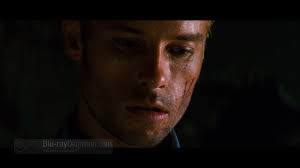
As it’s a mystery thriller there is a lot of blood and gore in it. The protagonist throughout some parts of the movie is covered in blood splatters and is also looking rough etc with an unshaken beard.

When the protagonist is running or doing something frantically there is an emphasis on his breathing or surrounding noises to show his fear.

Pictures are from the Internet 

Friday, 13 November 2015

Opening Sequence Analysis

Memento


The opening sequence starts off with the film production company’s logo which is ‘Newmarket’ films. The distribution company has been involved in movies such as Cruel Intentions, Donnie Darko and The Usual Suspects which follow the same genre of Neo-Noir, Mystery and Psychological Thriller and Crime which link in with Memento which has elements of all the genres listed before.

The next scene is the credits scene which shows the production company again and also the international distribution company which is ‘Summit Entertainment’. Then another production credit is shown to show who produced the movie, Suzanne Todd has produced Predator 2, Die Hard 2 and Lethal Weapon 2 which have some similar aspects to Memento.

The credits are against a plain black background with a light blue colour to contrast against and stand out. The main actor ‘Guy Pearce’ hadn’t done much work in the genre of thriller or mystery prior to Memento so it shows that the movie’s purpose is focused on the narrative and not which big star is portrayed in it. The main credits only show 3 names to show who the main characters are in the movie.

The title of the movie is then showed, all in caps and matching the previous credits as it’s all blue.  The background of the scene which is black cross fades into the footage from the movie of a man holding up a Polaroid picture of bloody tiles and a dead body. The scene in the picture seems to contrast the scene happening around him. Whilst this occurs the title of the movie stays on over the background.  Credits for the other characters, casting and music appear as the protagonist continues to stare at the image.

The actor then shakes the Polaroid picture and stares at it again to get a clearer image of what its showing. The colours of the picture continue to change as he repeatedly shakes the image. The once clear and red image has now turned to something similar to a blank slate which represents the narrative and the aspect that the main character has anterograde amnesia who can’t remember the recent past so the clear image going blank is a metaphor for that.

The shot then changes in a reverse shot from him taking the picture out of his pocket to placing it back into a camera. This shows that the previous events were all in a reversed order and link into the narrative structure.  The protagonist is then shown for the first time and his face is covered in blood streaks and sweat to show he’s been in some sort of fight.

The shot then continues to go in a reverse order with the main character putting the gun away (getting his gun out), a close up of his face is shown subtly taking a breath in to show his shock of something and that it’s over now. He’s wearing a suit which stands out of place against the scenario. An extreme close up is then shown of blood but it’s falling in the reverse way and back up the wall. An extreme shot is then shown of a bullet on the ground; the simplicity of the shot adds emphasis to the object. A similar shot of an extreme close up is shown of a pair of glasses hinted to link to the victim, the glasses are all bloody and surrounded by blood streaked tiles.

 The shot of the victim face down is shown covered in blood next to the glasses. His head is centre stage in the shot to show that the blood is his and from a high angle to show he’s on the ground and that this may be from the perspective of the protagonist. A shot of the gun flying upwards to the main character’s hands is shown to illustrate clearly that the events occurring are in a reversed order.

The camera then follows the actor downwards and zooms in to show his slightly angry facial expressions and his crouched body language over the victim.  The previous shots of the glasses and bullet are shown again but in reverse order to show they both are important to the events that occurred. A shot of the victim reversing from the ground to sitting up is shown, the blood also reverses back into nothing and the bullet goes into the protagonist’s gun.

The editing so far has been slow paced but the moment the gun is put into its compartment which as it’s in reverse order is the bullet being fired. The editing pace quickens drastically and we catch a glimpse of the victim’s face as he’s being shot.  


The music during the credits is instrumental and very dramatic; as the Polaroid image is shaken and taken there is its emphasis on the noise – all the protagonist’s actions have been highly emphasised to compare it to the background music. The shot then ends with the victim shouting something. 


Saturday, 31 October 2015

Cinematography

A video showing different camera angles and movements

All video/image sources are labelled and the rest are my images

A glossary of key terms that are from the video

Friday, 30 October 2015

Textual Analysis

Here are 3 movie posters from different genres that I've analysed for their visual codes and connotations and linked it to genre, narrative, characterisation and ideologies


Here is an example of textual analysis of a movie poster I did in class;


Friday, 23 October 2015

Characterisation

Characterisation in Drive


Characterisation is when information about characters is presented though their dialogue, actions and thoughts for narrative purposes furthermore mise en scene is used to present character style (costume and props), personality and actions (camera angles and shots) and additional information (sound and lighting). 


The opening scene and the rest of the movie ‘Drive’ uses both Macro and Micro elements to present the main character is who portrayed by the actor Ryan Gosling. 


The first shot of the character the audience only catches a glimpse of how he looks like but only from the back. The scene shows him looking out of the window and the camerawork is designed to show that the protagonist has a strong knowledge of the streets and is somehow linked with them. Furthermore the lighting is dark with the only source of light coming from a motel supplied lamp. This builds the mystery element for the character and infers that the  character is isolated and alone always living on the move which contradicts the setting of Los Angeles which is busy and full of life. 


As the opening scene progresses the protagonist's face still hasn't been proper;y shown which additionally builds mystery to who the character is and creates a feeling of compulsiveness to watch on and discover who the intriguing character is. The genre of the movie is now more openly hinted at with the mystery and action element. 


The first clear shot of the character the audience has is a low angle mid shot which shows that the character is superior or has a sense of power/strength about him to give him control or a status of some kind. However similar to the previous shot the lighting of the shot is still very dark with only the city lights to show the character's face this further adds to the mystery of the character. 


Throughout Drive the protagonist wears a retro bomber jacket which has a scorpion on the back. Not only does this link to the end of the movie when the character gives his monologue in a voice over. It also reflects on his personality - the metaphor of the scorpion shows that character can be calm and soft at times but when you cross him he's dangerous. Also as the main character is quite calm throughout the first half of the movie his actions near the end of the movie are quite surprising which adds a element of shock for the audience. 


The protagonist personality and actions are very similar to those of cowboy films from the 60s. In typical cowboy films the hero comes to town and helps the damsel in distress or the towns people. Similarly the character in Drive moves into a new apartment and ends up saving his neighbours. He also chews on a toothpick similarly to the cow boys did in western movies. 


So from the macro and micro elements in the scene the audience learns that the protagonist is;

  • Getaway Driver and Stunt Driver
  • A quiet loner which shows his mystery aspect
  • He's very calm under pressure and likes to be in control 
  • Plans every action he does to the last detail 
  • At the start he's submissive and seen as vulnerable but similar to a scorpion but once he's back stabbed he turns dangerous and violent. 

Tuesday, 6 October 2015

Narrative Theory

Narrative 

Narrative is the way the foundations of a story are arranged to present to the audience.

Tzvetan Todorov 


Tzvetan Todorov is a Bulgarian philosopher and literary critic who was studying Russian folklore when he came up with his theory called the ‘Todorov’s Narrative Theory’ which states that most stories and plots follow the basic pattern. 

Todorov’s theory can only be applied to old fairy tales or similar stories with the simple and easy to follow plotline however it’s quite unsophisticated and not very creative.  
Poster I created on Canva


Vladmir Propp 
Vladimir Propp was a scholar and literary critic who revised and read many Russian folk tales in the 1920s and realised that many of these narratives followed the basis of having similar character types 


Claude Levi-Strauss
Claude Levi-Strauss was a philosopher and anthropologist whose theory of “Binary Opposition” suggested that narrative conflict was caused by a sequence of opposing forces. The theory is used to show how most aspects of narrative have an equal and opposite force.

 Examples from the movie


All posters and videos are created by myself