Saturday, 31 October 2015

Cinematography

A video showing different camera angles and movements

All video/image sources are labelled and the rest are my images

A glossary of key terms that are from the video

Friday, 30 October 2015

Textual Analysis

Here are 3 movie posters from different genres that I've analysed for their visual codes and connotations and linked it to genre, narrative, characterisation and ideologies


Here is an example of textual analysis of a movie poster I did in class;


Friday, 23 October 2015

Characterisation

Characterisation in Drive


Characterisation is when information about characters is presented though their dialogue, actions and thoughts for narrative purposes furthermore mise en scene is used to present character style (costume and props), personality and actions (camera angles and shots) and additional information (sound and lighting). 


The opening scene and the rest of the movie ‘Drive’ uses both Macro and Micro elements to present the main character is who portrayed by the actor Ryan Gosling. 


The first shot of the character the audience only catches a glimpse of how he looks like but only from the back. The scene shows him looking out of the window and the camerawork is designed to show that the protagonist has a strong knowledge of the streets and is somehow linked with them. Furthermore the lighting is dark with the only source of light coming from a motel supplied lamp. This builds the mystery element for the character and infers that the  character is isolated and alone always living on the move which contradicts the setting of Los Angeles which is busy and full of life. 


As the opening scene progresses the protagonist's face still hasn't been proper;y shown which additionally builds mystery to who the character is and creates a feeling of compulsiveness to watch on and discover who the intriguing character is. The genre of the movie is now more openly hinted at with the mystery and action element. 


The first clear shot of the character the audience has is a low angle mid shot which shows that the character is superior or has a sense of power/strength about him to give him control or a status of some kind. However similar to the previous shot the lighting of the shot is still very dark with only the city lights to show the character's face this further adds to the mystery of the character. 


Throughout Drive the protagonist wears a retro bomber jacket which has a scorpion on the back. Not only does this link to the end of the movie when the character gives his monologue in a voice over. It also reflects on his personality - the metaphor of the scorpion shows that character can be calm and soft at times but when you cross him he's dangerous. Also as the main character is quite calm throughout the first half of the movie his actions near the end of the movie are quite surprising which adds a element of shock for the audience. 


The protagonist personality and actions are very similar to those of cowboy films from the 60s. In typical cowboy films the hero comes to town and helps the damsel in distress or the towns people. Similarly the character in Drive moves into a new apartment and ends up saving his neighbours. He also chews on a toothpick similarly to the cow boys did in western movies. 


So from the macro and micro elements in the scene the audience learns that the protagonist is;

  • Getaway Driver and Stunt Driver
  • A quiet loner which shows his mystery aspect
  • He's very calm under pressure and likes to be in control 
  • Plans every action he does to the last detail 
  • At the start he's submissive and seen as vulnerable but similar to a scorpion but once he's back stabbed he turns dangerous and violent. 

Tuesday, 6 October 2015

Narrative Theory

Narrative 

Narrative is the way the foundations of a story are arranged to present to the audience.

Tzvetan Todorov 


Tzvetan Todorov is a Bulgarian philosopher and literary critic who was studying Russian folklore when he came up with his theory called the ‘Todorov’s Narrative Theory’ which states that most stories and plots follow the basic pattern. 

Todorov’s theory can only be applied to old fairy tales or similar stories with the simple and easy to follow plotline however it’s quite unsophisticated and not very creative.  
Poster I created on Canva


Vladmir Propp 
Vladimir Propp was a scholar and literary critic who revised and read many Russian folk tales in the 1920s and realised that many of these narratives followed the basis of having similar character types 


Claude Levi-Strauss
Claude Levi-Strauss was a philosopher and anthropologist whose theory of “Binary Opposition” suggested that narrative conflict was caused by a sequence of opposing forces. The theory is used to show how most aspects of narrative have an equal and opposite force.

 Examples from the movie


All posters and videos are created by myself


Wednesday, 30 September 2015

Genre, Genre Conventions and Iconography

Genre
Genres are a way of categorizing different things like movies. Different genres have their own conventions and components and are commonly known as generic signifiers Components include plotlines, locations, characters and themes some of them are only specific to one genre whilst others expand over more than one.
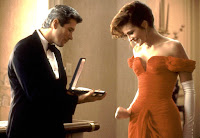


All images are from the Internet 
Iconography
Iconography is the way certain iconic signs can be categorized or are recognized as part of a certain genre.
Moving images are polysemic iconic signs as they represent real things but to the audience they have different meanings. This leads to an audience having various interpretations of a movie based on how they read the signs. .  

     
All images are from the Internet 


Genre Conventions 
Conventions and also codes are what both the audience and the film maker agree is typically recognized with the particular genre. The plot and story are normally linked with particular genres for example a romantic comedy will include the 2 characters meeting and end with them living their happily ever after whilst in horror there’s more supernatural creatures and death involved. Locations also show typical conventions like soaps have a typical street with most of the characters in it or situations like action movies where there are car chases and explosions. Other ways conventions are showed are by the characters, spy films have a typical secretive white male lead whilst teenager movies have a female young lead.  Lastly costumes also link with conventions and codes as they not only show the time period but emphasize objects to create a realistic impression for the set.


All images are from the Internet 
                  
Genre conventions for Horror Mystery or also known as Mystery Thriller


Pictures are from Google

Kuleshov Experiment

Kuleshov Experiment


Lev Kuleshov was a Soviet filmmaker in the 1910s to the 1920s and he established a film editing effect called the ‘Kuleshov Experiment’. He showed how the audience gain more understanding from two continuous shots than just a single shot. The audience can watch the sequence of images and form their own opinion based on how the second shot reacts with the previous shot.

Video from Youtube
 The experiment was also studied by Alfred Hitchcock a filmmaker who adapted the effect with his own clips to show how the audience will view a person (the clip of the actor stays exactly the same) differently when different shots are added to change the overall message.
Video from Youtube


In a group we created are own version of the Kuleshov experiment by taking a clip of a female teacher saying “yummy” and placing different clips before it. The first clip is of a platter of cookies with an over voice asking “If this could be described in one word. What would it be?” then the clip of the teacher is shown. This repeats but with a young male student and also a teacher. This shows how the audience’s reaction of the female teacher changes from her supposed reaction to the  additional clips. 
Video created as a group

Tuesday, 29 September 2015

Mediation Theory and Verisimilitude

Mediation Theory and Verisimilitude

Mediation Theory is the idea that what you are viewing is the creator’s version, the version you are watching is want they want you to see. Following an example of a football game the people watching it live will have a view of the entire pitch and so they can focus on all the events that are occurring whilst the people watching it on the TV will have to focus on what the mediator portrays to them.  The camera may cut to a close up of the goal which is the mediator’s way of telling the audience that they should focus there. 
                 

Verisimilitude is the appearance that something is real or believable. Internal Logic is where within the world of the TV show/movie the events/conventions are real for example in the TV shows Vampire Diaries the idea of vampires is believable in that world. Reality Logic is relies heavily on realism so it relates to more contemporary and romance movies and soap shows which focus on portraying relate able events. 
  
Images are all taken from the Internet